Tennis warm up exercises get your heart rate up, loosen the joints you turn and stretch on court, and wake up the muscles that hold them steady. This guide gives you a 10-minute routine for before you play, the stretches and mobility drills behind it, a home conditioning plan and a cool down for afterwards.
Good tennis warm up exercises take about 10 minutes. Start with 3 to 5 minutes of light cardio such as skipping or jogging, then do dynamic stretches, a few mobility and activation drills, and finish with 3 minutes of shadow swings before you hit.
A 10-Minute Routine Of Tennis Warm Up Exercises
These tennis warm up exercises follow five steps. Do them in order, and raise the pace a little each minute so your body is ready by the time you step on court. Most tennis warm up activities fit into one of these steps.
Begin with 3 to 5 minutes of cardio. Skipping, jogging on the spot or jumping jacks raise your heart rate and circulation, and skipping also trains you to coordinate your arms and legs and stay on your toes.
Move on to dynamic stretches, then mobility drills for the hips, upper back and shoulders, which loosen the whole body through movement. Next, activate the muscles that keep your joints stable, and end with shadow swings that copy your strokes. Each step is explained below.
Dynamic Tennis Warm Up Exercises Before You Play
Dynamic stretches move each muscle through its range instead of holding it still, which suits a sport full of sprints, turns and swings. Four work well before tennis.
The straight leg march loosens the lower back, glutes and hamstrings: stand tall, reach one hand forward at hip height, and kick the opposite straight leg up towards it, then switch sides. Hand walks stretch the shoulders, core and hamstrings: bend forward until your hands are flat on the ground, walk them out until your back is almost straight, then walk your feet in.
Trunk rotations help balance and the muscles along the spine: stand with your feet shoulder-width apart, arms out in front, and turn your upper body slowly from side to side. Lateral lunges work the inner thighs, glutes and quads: take a big step to one side, bend that knee and keep the other leg straight, then push back and switch.
Mobility For Tennis: Hips, Back And Shoulders
Tennis asks your hips, upper back and shoulders to move into deep positions, so a few mobility drills belong in every warm up.
The kneeling thoracic rotation opens the upper back. On your hands and knees, place one hand behind your head and rotate that elbow up towards the ceiling, then back down. A mobile upper back lets your trunk share the work of the serve with your shoulder.
The hip flexor slide opens the front of the hips, which tighten with the stop-start movement of a rally. From a lunge, slide your back leg further behind you and back again. The side lunge stretches the inner thigh muscles you use to push off sideways. For more work on the joint that serves and smashes, see our shoulder exercises for tennis players.
Muscle Activation And Shadow Swings
Activation drills switch on the muscles that hold your joints steady before they have to work hard. Depending on your body, that could be a plank for the core, glute bridges for the hips, or light resistance band rotations for the rotator cuff in your shoulder. Your coach can tell you which ones suit you.
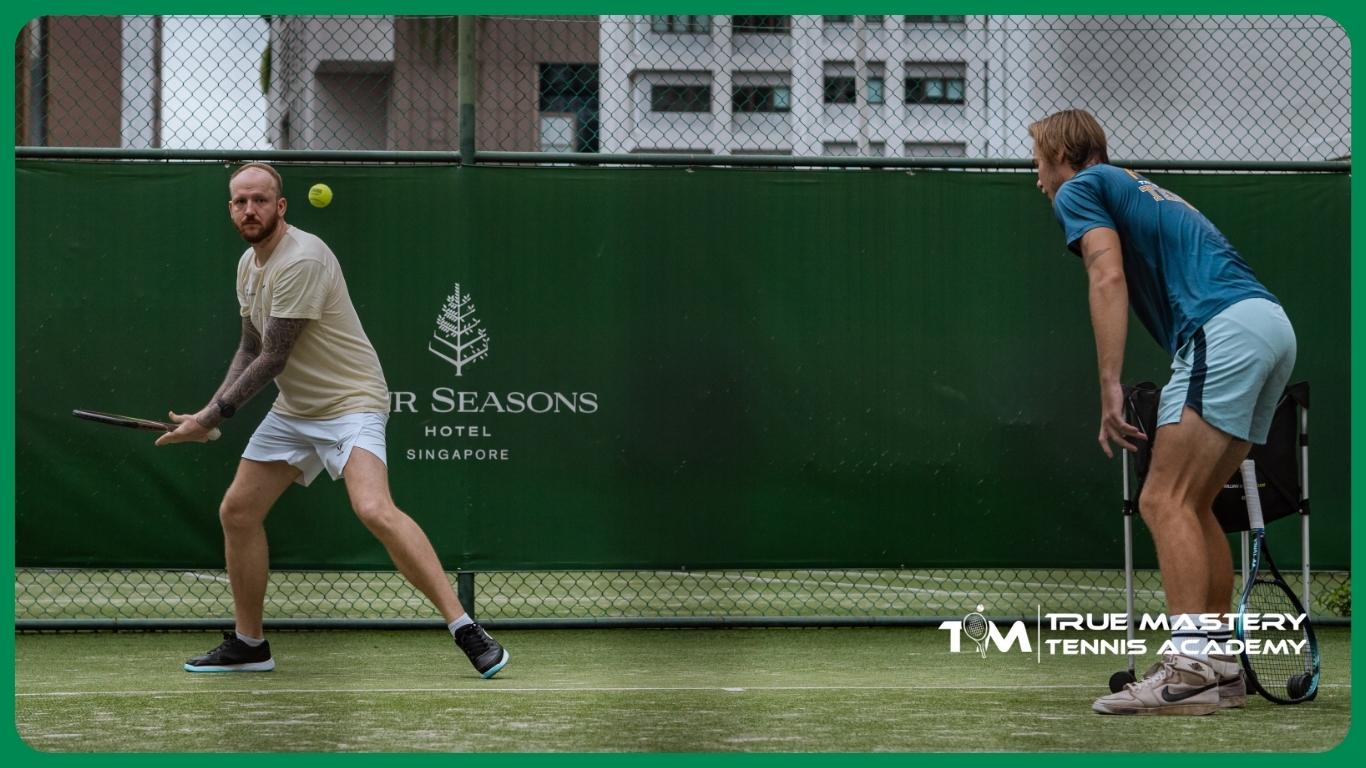
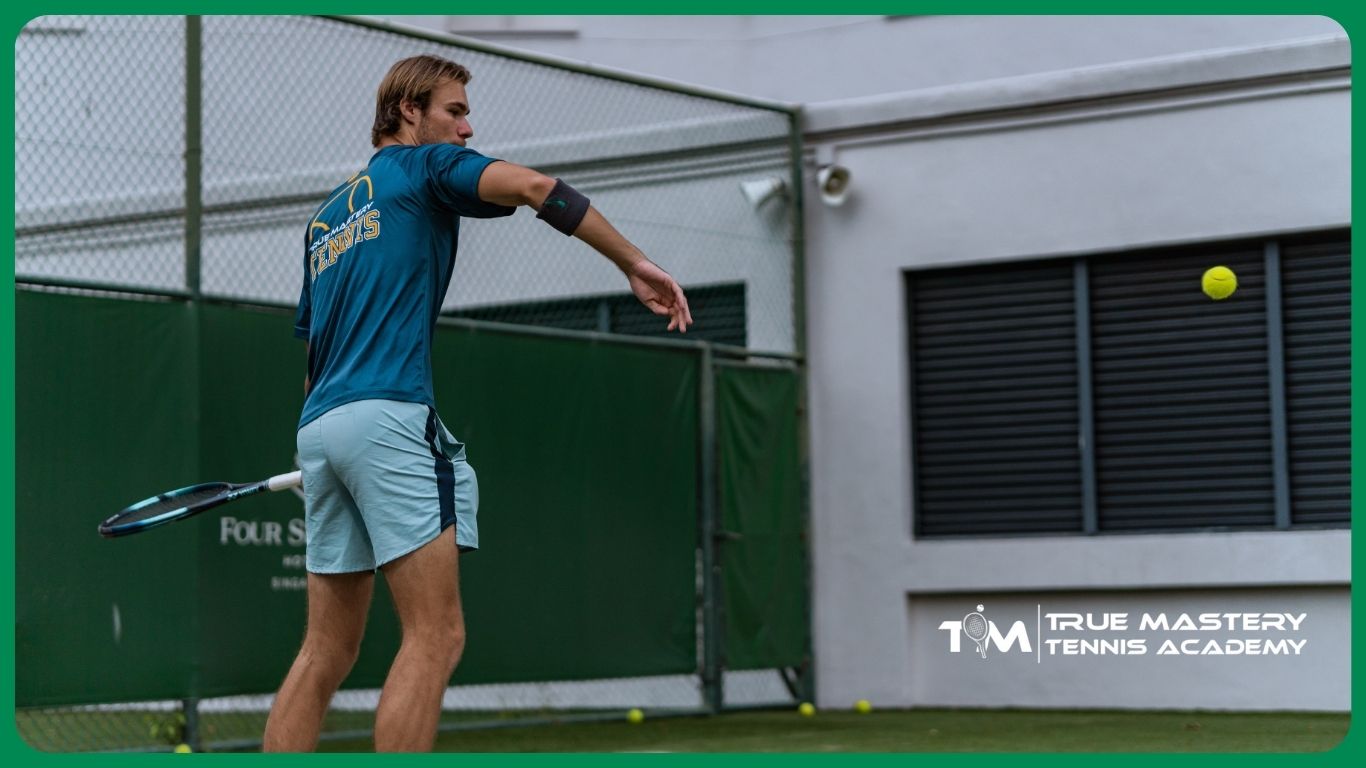
Shadow swings finish the warm up. Holding just your racket, copy the strokes and footwork you are about to use: forehands, backhands, volleys, overheads and smashes. Spend at least 3 minutes on them and build up the speed, which readies both your body and your mind for the first ball.
Foam Rolling And Tennis Ball Release
Some spots stay tight even after a warm up. Rolling them out before you stretch helps them move freely again.
A foam roller works well on the calves, quads, hamstrings, glutes and upper back. Roll slowly over each area and pause on any tender spot. A tennis ball reaches smaller areas: roll it under the sole of your foot while seated, or lean against a wall with the ball between your back and the wall.
For a tight point, press the ball on it and hold for up to 3 minutes until the muscle relaxes.
Home Conditioning To Prevent Tennis Injuries
A stronger body takes the load of tennis better. These tennis injury prevention exercises use your own body weight, so you can do them at home.
For strength, use squats, lunges, push-ups, planks and glute bridges, focusing on the legs, core, shoulders and forearms. For the core and balance, add side planks and bird dogs. For footwork, practise side-to-side shuffles and in-and-out steps around markers on the floor.
A balanced week might include two or three strength sessions, two footwork sessions, two core sessions and a few minutes of mobility every day, with rest days in between. Our guide on how to improve tennis fitness builds on this plan.
Cool Down And Other Ways To Stay Injury-Free
After you play, walk or jog lightly for a few minutes, then hold static stretches for the main muscle groups for 15 to 30 seconds each. The USTA’s guide to the dynamic warm-up recommends this order too: dynamic tennis warm up exercises before you play, and static stretching after play.
A racket and grip that fit your hand and playing style ease the load on your wrist and elbow, and shoes with good cushioning and grip protect your ankles and knees. Good technique matters just as much, since clean strokes spread the effort across your whole body. If your elbow is already sore, our tennis elbow exercises can help.
Rest when something hurts, and see a doctor or physiotherapist about pain that stays.
Learn Safe Technique With A Coach
A coach checks your strokes and footwork, so the effort comes from your legs and trunk rather than your arm alone. Our private tennis lessons are S$109 a lesson, or S$1,200 for 12 lessons, and each lesson runs for one hour.
Adults can start with our adult tennis lessons, and children with our kids tennis lessons. Tell us your area and the times that suit you, and we will match you with a coach. Tap the button below to message us on WhatsApp.
Start with mini tennis: both players stand at the service line and rally gently with soft, short strokes. After a few minutes, move back to the baseline, then add volleys and a few easy serves before you play points.
Your shoulder and upper back. Do arm circles and light band rotations, then hit five or six serves at half pace before you swing at full speed. Build up the speed gradually so the shoulder is ready for full power.
Children warm up best through games. A round of tag, a ball toss and catch, skipping or a quick relay raises their heart rate and gets them moving in every direction, which is exactly what the first rally needs.
Keep a short version ready. Skip for two minutes, do ten leg swings on each leg, ten arm circles each way and a minute of shadow swings, then start with a few easy rallies before you play points.
Click on the link to find out more about TM Tennis Academy’s lesson package. Chat with us today!