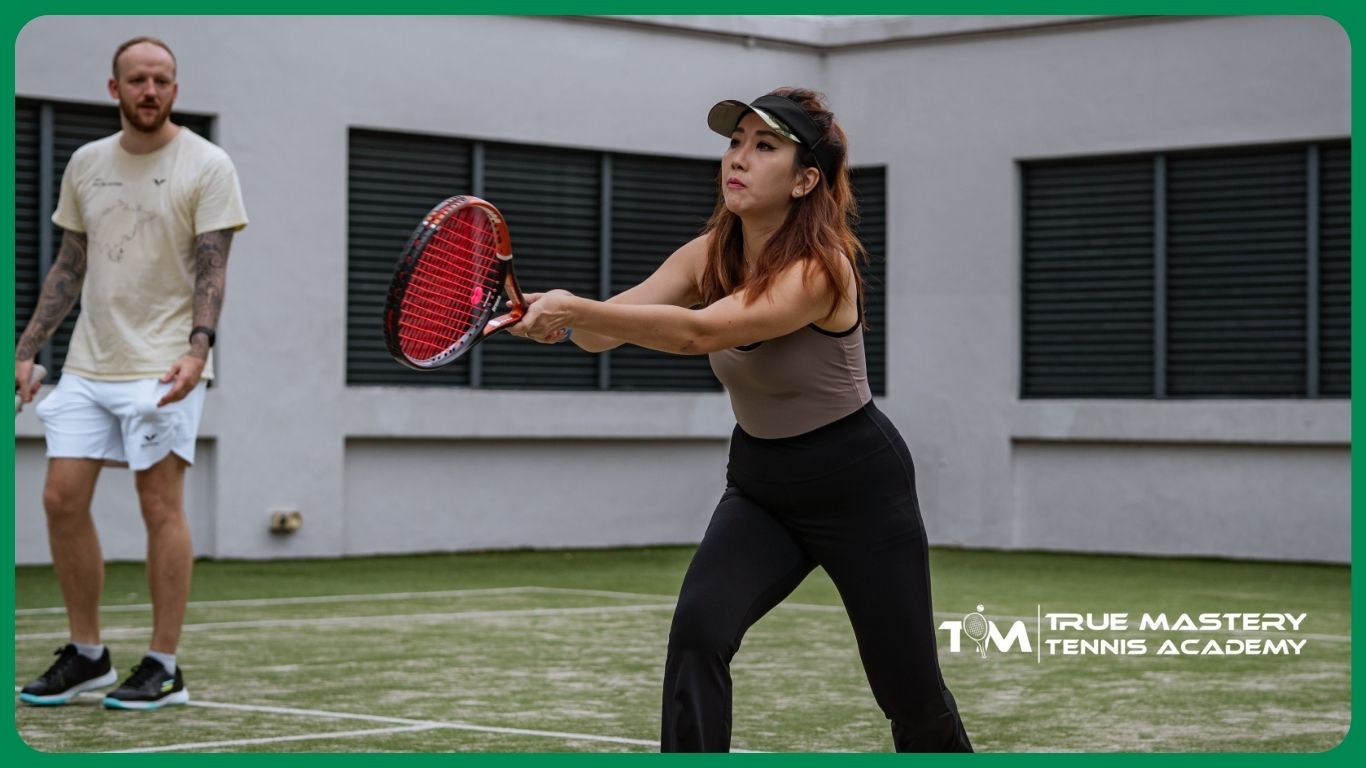
Professional Tennis Training: 7 Drills To Build Your Game
Professional tennis training is built on drills: short, focused exercises that repeat one stroke or one pattern until it holds up in a match. This guide sets out the drills and professional tennis training techniques coaches use with competitive players, what each one trains, and how you can add them to your own practice.
Professional tennis training combines rally drills for consistency, serve drills against targets, net drills for volleys, footwork drills for movement and point-play games that add pressure. Players repeat each drill with a coach, then test it in match play against a real score.
What Professional Tennis Training Looks Like
A professional tennis training session moves from warm-up rallies to focused drills, then to games and points. Each drill trains one thing, such as depth, direction or a serve placement, so you can measure your progress from week to week.
The best drills look like real tennis. They use the patterns you meet in matches and finish with a score, so your practice carries straight into your next match.
Cross-Court Rally Drill
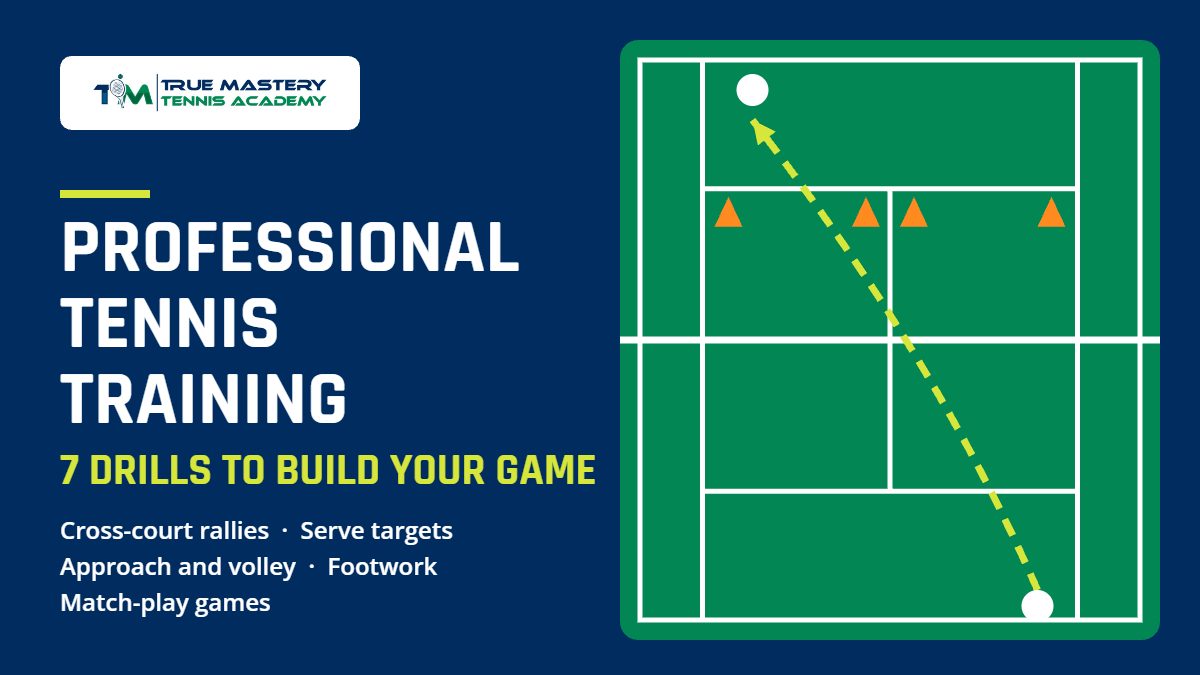
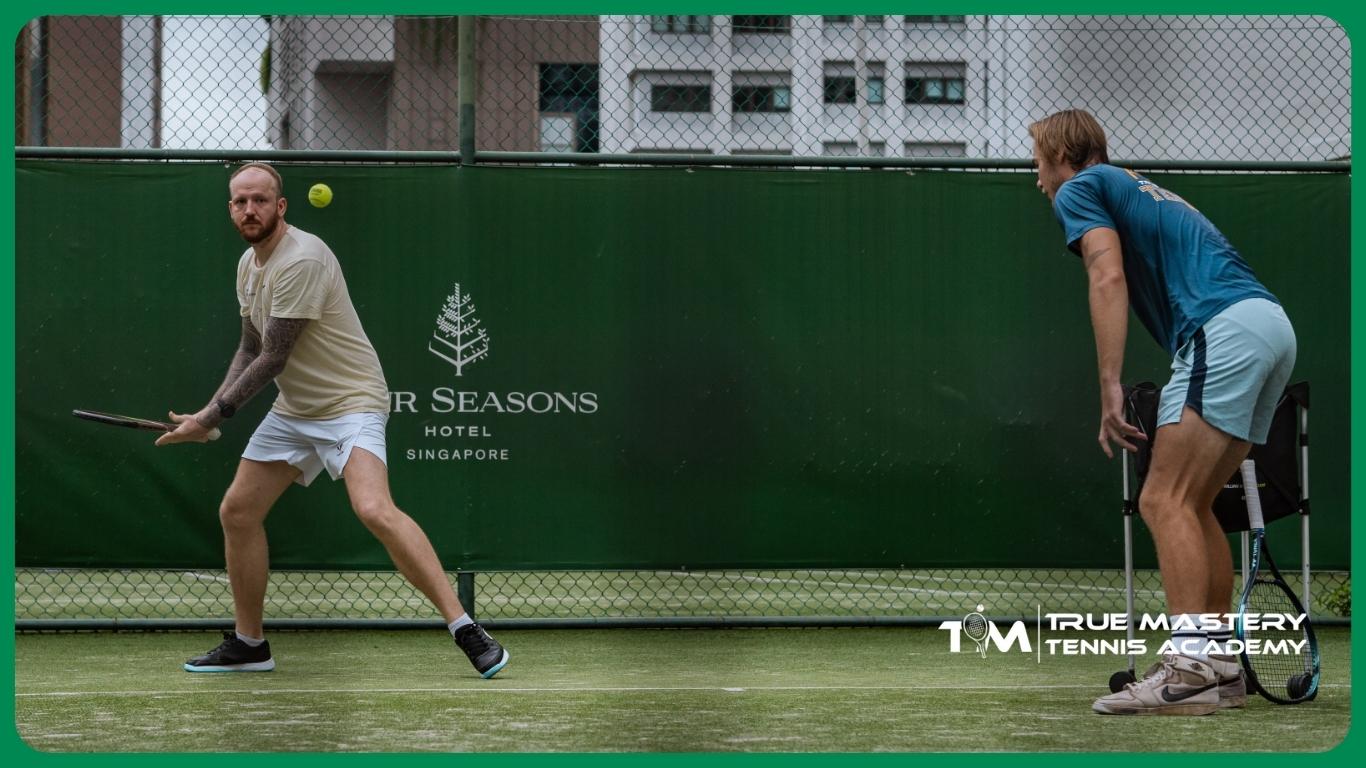
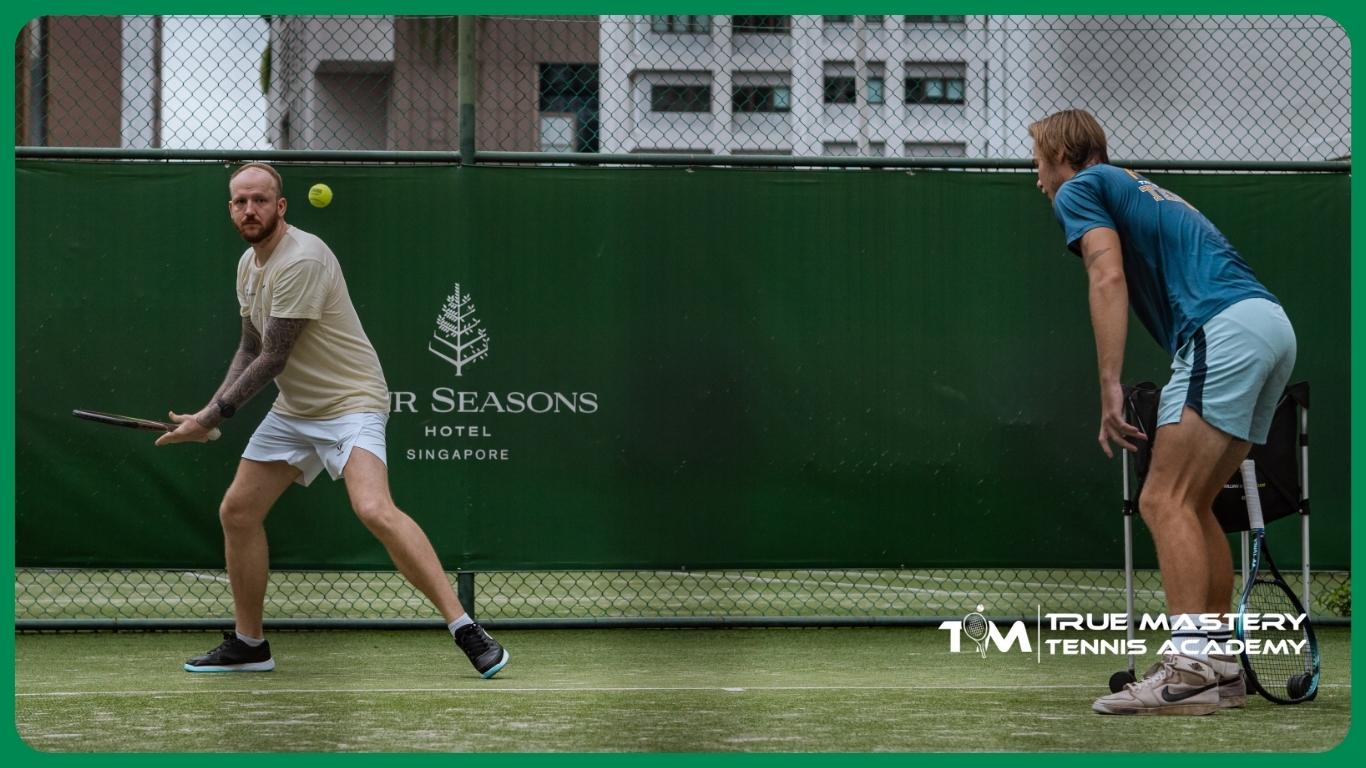
The cross-court rally is the base of most professional tennis training. You and a partner rally diagonally, forehand to forehand or backhand to backhand, aiming deep past the service line. Cross-court gives you the longest stretch of court and the lowest part of the net, so it is the safest pattern to build on.
Count your shots in a row and set a new target each session. Our guide to tennis drills to improve consistency adds solo and wall drills you can do between lessons.
Change Of Direction Drill
Once your cross-court rally is steady, add a change of direction. One player hits cross-court, the other sends the ball straight, parallel to the sideline, and the rally continues in that pattern. You learn to move your feet early and change the angle of the racket face while keeping control.
Start slowly and keep the ball in play, then add pace as the pattern settles. This drill builds the shot you use to open the court and take control of a point.
Serve Target Drill Under Pressure
Serving is the one shot you control from start to finish, so target work is a key part of professional tennis training. Place cones or towels in the corners of each service box and serve a set of balls at each target.
Your coach feeds a short ball, you hit an approach shot deep into the corner, move forward and finish the point with a volley. The drill links three skills in one pattern: reading the short ball, moving through the shot and closing the net.
Keep your racket up and your steps short as you move forward. A short, firm punch with a steady wrist keeps your volleys under control.
Footwork And Split-Step Drill
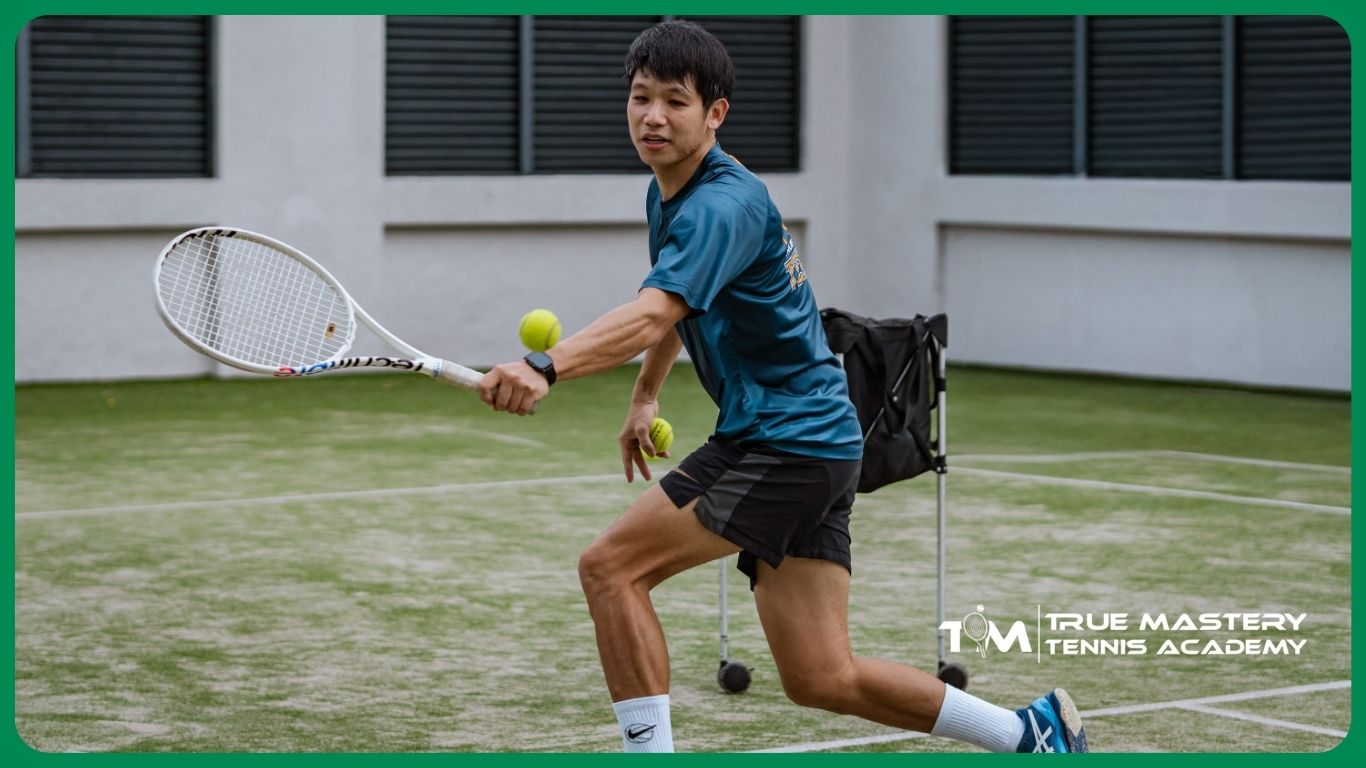
Good footwork is part of every stroke. Practise the split-step, a small hop as your opponent hits, so you land balanced and ready to push off in any direction. Then add side shuffles and recovery steps back to the middle of the baseline after each shot.
Short bursts with full rest train the quick movement that tennis needs. Strong footwork also keeps you calm under pressure, and our article on mental tennis training and goal setting covers the mental side of match play.
Match-Play Games And Coaching In Singapore
Drills become match skills when you add a score. The LTA’s three drills to build consistency, from coach Angela Crossley, include Racket and Ball, a game where the first player or team to 20 points wins, and each rally winner scores one point for every shot they hit in that rally.
Our private tennis lessons are S$109 a lesson, or S$1,200 for 12 lessons, and each lesson runs for one hour. Our competitive tennis training builds these drills into tournament preparation. Tell us your area and the times that suit you, and we will match you with a coach who plans drills around your game. Tap the button below to message us on WhatsApp.
Two or three focused sessions a week is a good rhythm to start with. Short sessions with full attention build better habits than long sessions where your focus drifts, and a rest day between them lets your body recover.
Yes, for part of it. Wall rallies, serve practice against targets and footwork work all suit solo practice. Rally and point-play drills need a partner or a coach, who also spots small faults you may miss on your own.
Start with a slow cross-court rally inside the service boxes. It teaches control and timing at a gentle pace, and you can move back to the baseline once you can keep the ball in play for several shots.
An hour works well: a short warm-up, two or three drills, then games or points to finish. Keep each drill short enough that every ball gets your full effort and focus.
Click on the link to find out more about TM Tennis Academy’s lesson package. Chat with us today!