Tennis gear is simpler than the shop shelves make it look. A beginner in Singapore needs three things to start, a racket, a few balls and proper tennis shoes, and everything else can be added as you play more often. This guide covers what each piece does, how to choose it, and what to bring to a first lesson.
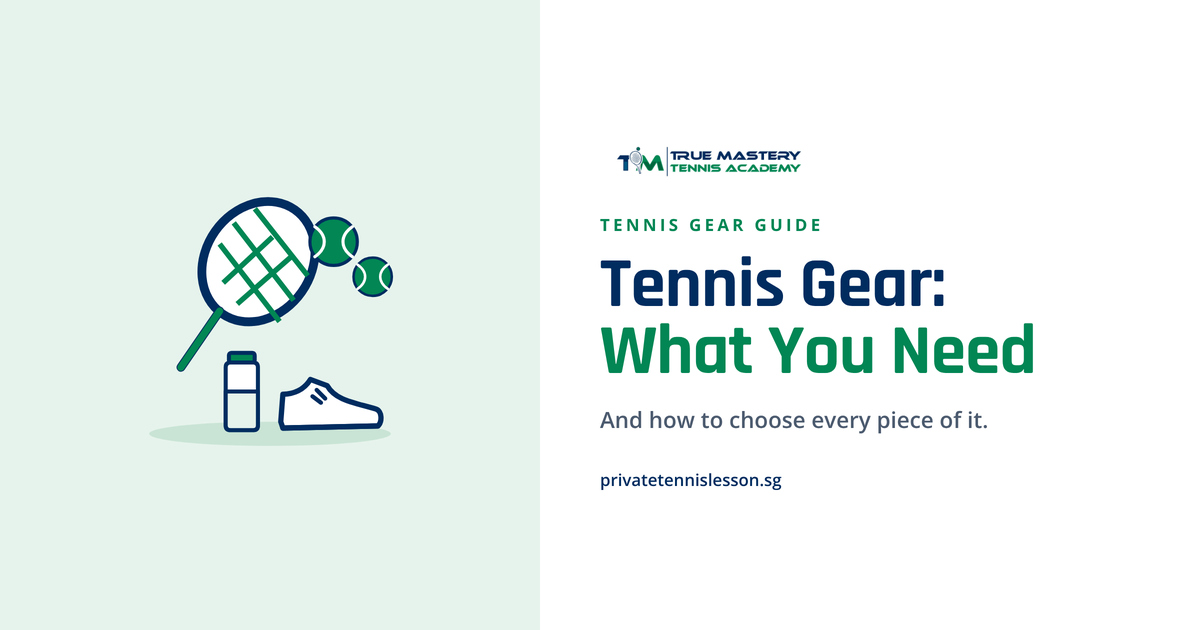
The tennis gear a beginner needs is a racket that suits your height and strength, a can of fresh balls, and tennis shoes built for side-to-side movement. In Singapore’s heat, add a water bottle, a small towel and light clothing that dries quickly. An overgrip, a wristband and a bag come next, once you play every week.
The Tennis Gear Meaning, In Plain Terms
Tennis gear is the equipment and clothing a player uses on court. Players also call it tennis equipment or tennis gears, and all three mean the same kit.
It falls into two groups. The first is what the game itself needs: the racket, the strings and the balls. The second is what keeps you comfortable and moving well for a full hour: shoes, clothing, a cap, water, a towel and a grip you can hold when your hands are damp.
The first group decides how the ball comes off your racket. The second group decides how long you can keep playing well, which matters just as much in our weather.
Start With A Racket, Balls And Shoes
That short list is all the tennis gear you need for your first few weeks of lessons.
An adult beginner does well with a light, forgiving racket with a larger head, since the bigger sweet spot gives clean contact on more of your early swings. Our guide to choosing an adult tennis racket explains head size, weight and balance in more detail.
Fresh balls bounce truer, which makes practice more useful. A can of three or four is plenty for a lesson or a rally with a friend, and slower practice balls help many beginners find their timing.
Tennis shoes protect your ankles and knees. Tennis asks you to move sideways, stop and push off again, so a shoe with a flat, durable sole and firm support at the sides keeps you steady on every change of direction.
How To Choose A Racket That Suits Your Game
The right racket feels easy to swing to the end of a lesson. If your arm is tired halfway through, the racket is too heavy for you right now.
Grip size matters as much as weight. Hold the handle in your hitting hand and you should be able to fit the index finger of your other hand into the gap between your fingertips and your palm. A grip that is slightly small can be built up with an overgrip, so when in doubt, choose the smaller size.
Strings shape how the racket feels. Lower tension gives more power and a softer feel, higher tension gives more control, and most beginners enjoy something in the middle. Our article on which tennis string to use compares the main string types, and a racket you play with every week is worth restringing as the strings lose their bite.
A coach who sees your swing is the best person to help here. A sensible start is to bring whatever racket you own to your first lesson and choose a new one once your stroke has settled.
Tennis Shoes And Clothing For Singapore's Heat
Shoes are the piece of tennis gear your body feels most. Choose shoes made for tennis. Running shoes are built for forward movement and cushioning, while tennis shoes are built for lateral support and a sole that grips the court as you change direction.
Fit is personal, and our guide on choosing the right tennis shoe size walks through how a tennis shoe should feel at the toe, the heel and the sides. Breathable mesh uppers suit our humid weather best.
For clothing, light colours and fabrics that wick sweat and dry fast keep you cooler through an evening session. A cap or visor helps on morning courts, and a water-resistant sunscreen makes sense for any lesson in the daytime sun.
The Small Tennis Equipment That Keeps A Session Going
Once you play every week, a few small extras make each session more comfortable.
A large water bottle comes first. An hour of tennis in Singapore’s humidity is thirsty work, and sipping between games keeps your energy steady to the final rally. A small towel for your face and hands sits well beside it.
An overgrip is the cheapest upgrade in tennis. It wraps over the handle, soaks up sweat and gives a fresh, tacky feel every few weeks. Our overgrip guide explains how to wrap one and when to change it. Wristbands keep sweat from running down to your hand, and a headband does the same for your eyes.
A tennis bag ties all your tennis gear together. A simple backpack with a racket compartment holds one racket, a can of balls, a bottle, a towel and a spare shirt, which is everything a weekly player carries.
Tennis Gear For Children
Tennis gear for children follows the same three basics in smaller sizes. A junior racket is chosen by the child’s height: with the child standing straight and the racket held at their side, the tip should sit just above the ground.
Young beginners also learn faster with softer, slower balls in red, orange and green, which give them more time to reach the ball and swing. Our article on what equipment toddlers need for tennis covers tennis equipment for preschoolers and the very youngest players, and our kids tennis lessons page covers our coaching for children.
Proper tennis shoes matter for children too. Growing feet need room at the toe, so check the fit every few months.
Looking After Your Tennis Gear
Good care keeps your tennis gear playing well for longer.
Keep your racket out of a hot car, since high heat can loosen the strings and weaken the frame over time. Store balls in their sealed can and open a fresh one once the old ones lose their bounce.
Strings lose tension gradually even when they look fine, so a racket played every week benefits from regular restringing. Shoes last longer when you wear them only on court and let them dry fully between sessions, and a quick wipe after each session keeps the uppers fresh.
Tennis Gear For Your First Lesson With Us
For a first lesson, bring a racket if you have one, comfortable sportswear, tennis shoes and a full water bottle. If you are still choosing a racket, ask us when you book and we will tell you what to bring.
Our coaches come to your court. Most lessons run at the student’s own condo tennis court, which is usually the easiest place to start. You can also book a court through ActiveSG’s tennis facilities and we will meet you there, and we are happy to help you book one.
Our private tennis lessons are S$109 a lesson, or S$1,200 for 12 lessons, and each lesson runs for one hour. Send us a message on WhatsApp with your area and the times that suit you, and we will arrange your coach and lesson time.
A racket, a can of balls and tennis shoes will carry you through your first month. Bring a cap for morning sun, and borrow a racket from a friend while you decide which weight suits you.
It is simply another name for tennis equipment, and you will see both words used on shop shelves and websites. Coaches usually mean the full kit a player carries to court, packed and ready in one bag.
It helps to wait a few lessons. A coach can watch your swing, check your grip size and suggest a racket weight, so the one you buy fits how you actually play rather than how you expect to play.
Tennis shoes are the better choice for regular play. Their soles are made for court surfaces, and the firm sides hold your foot in place when you stretch wide for a ball, which helps protect your ankles over a season.
Click on the link to find out more about TM Tennis Academy’s lesson package. Chat with us today!