What Should Adult Beginners Expect From Their First Tennis Lesson?
Learn What Adult Beginners Can Expect From Their First Tennis Lesson, From Warm-Ups And Basic Strokes To Coaching, Equipment And What Happens Next.
First Adult Tennis Lesson
Starting tennis as an adult can feel exciting and slightly intimidating, especially if you have never held a racket properly. At TM Tennis Academy, we work with adults who begin at very different ages, fitness levels and sporting backgrounds. Your first lesson is not a test. It is an introduction that helps us understand how you move, how comfortable you are with the racket and what you want to achieve.
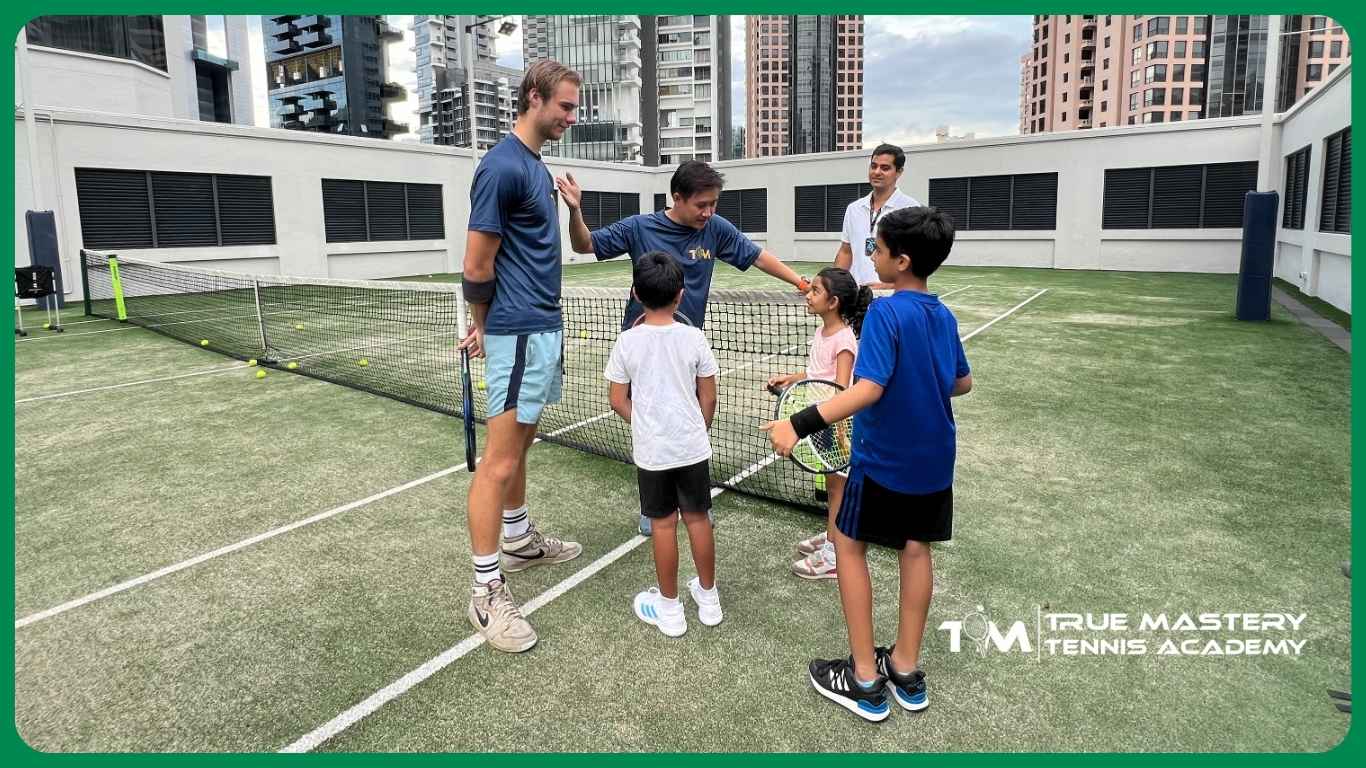
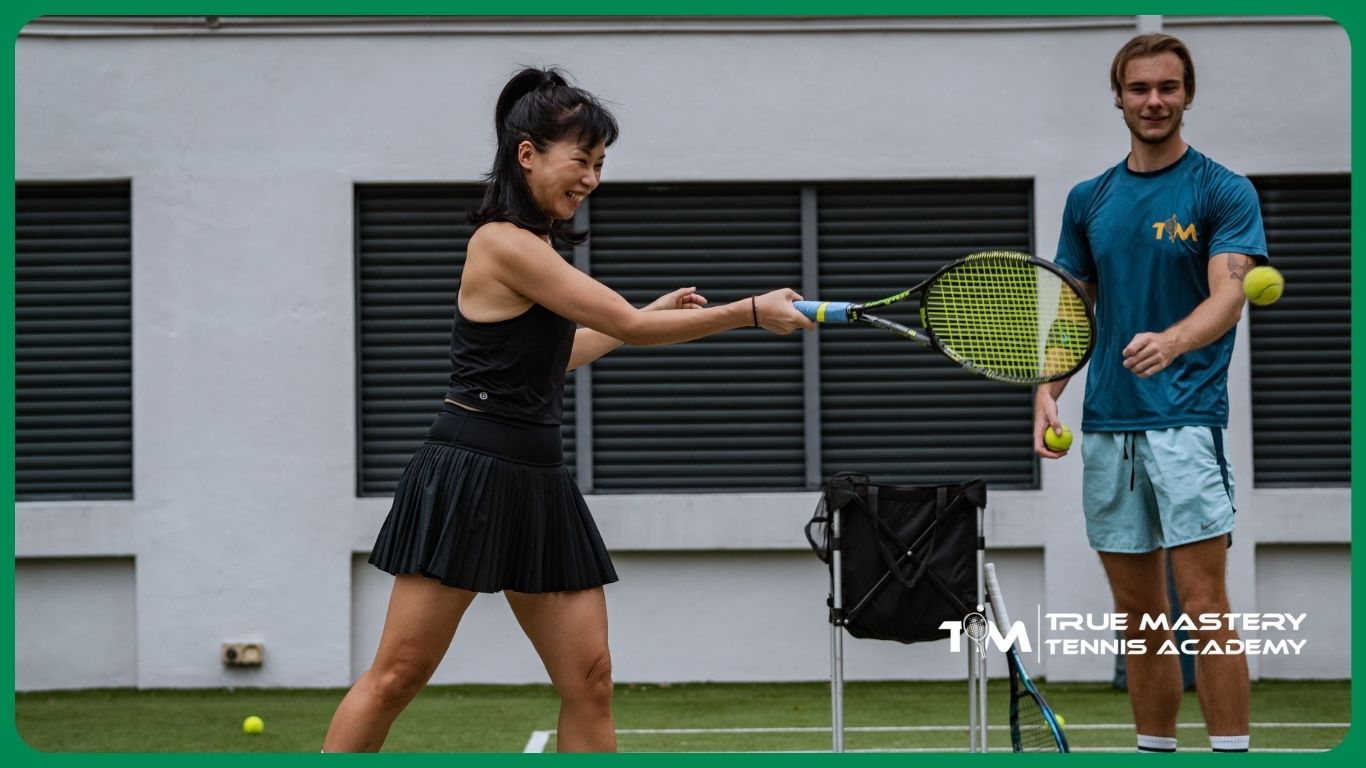
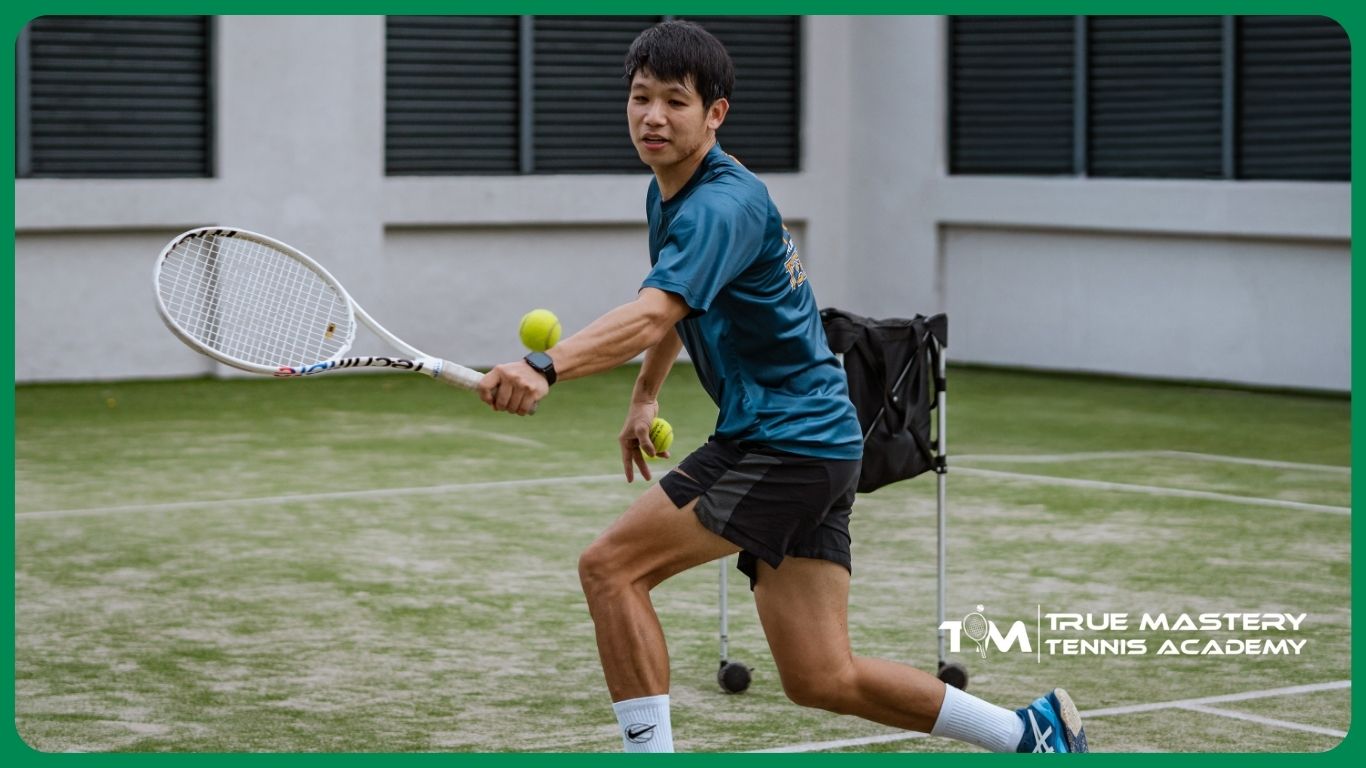
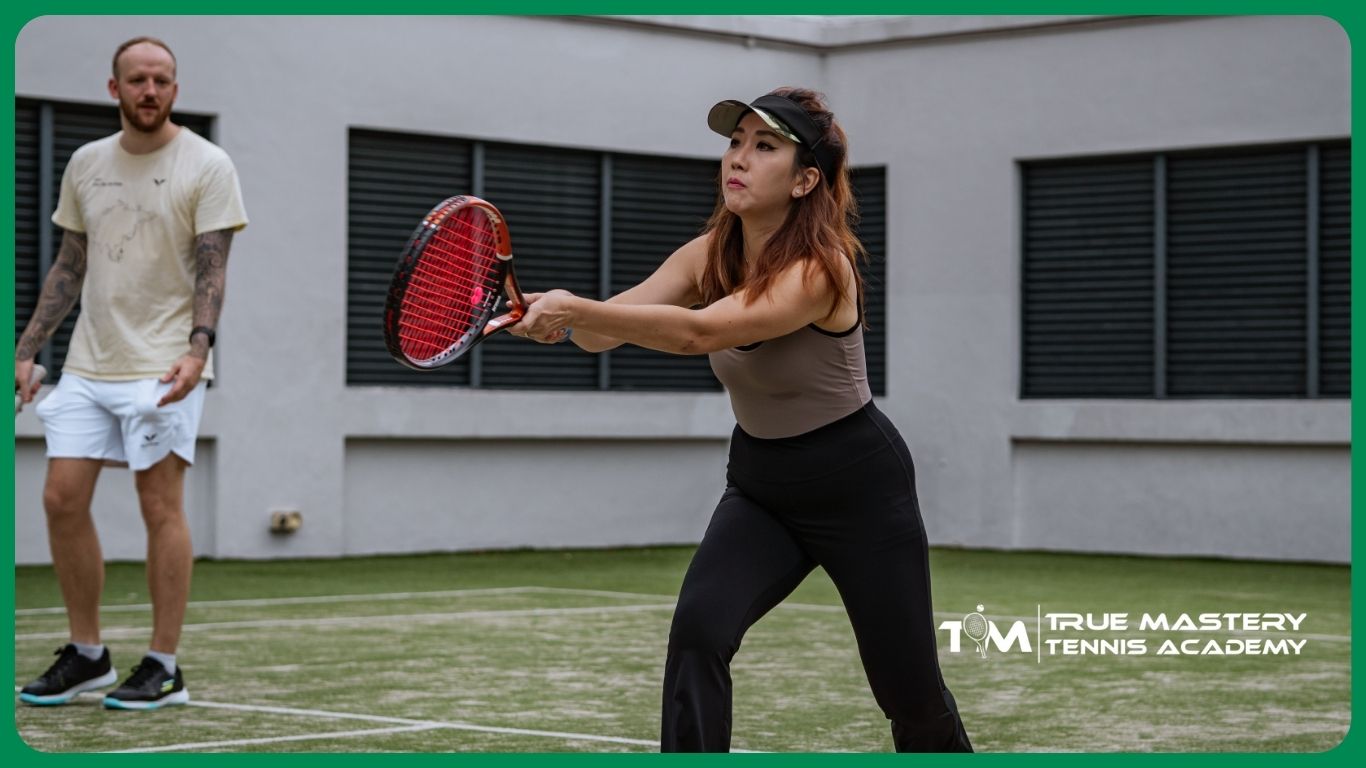
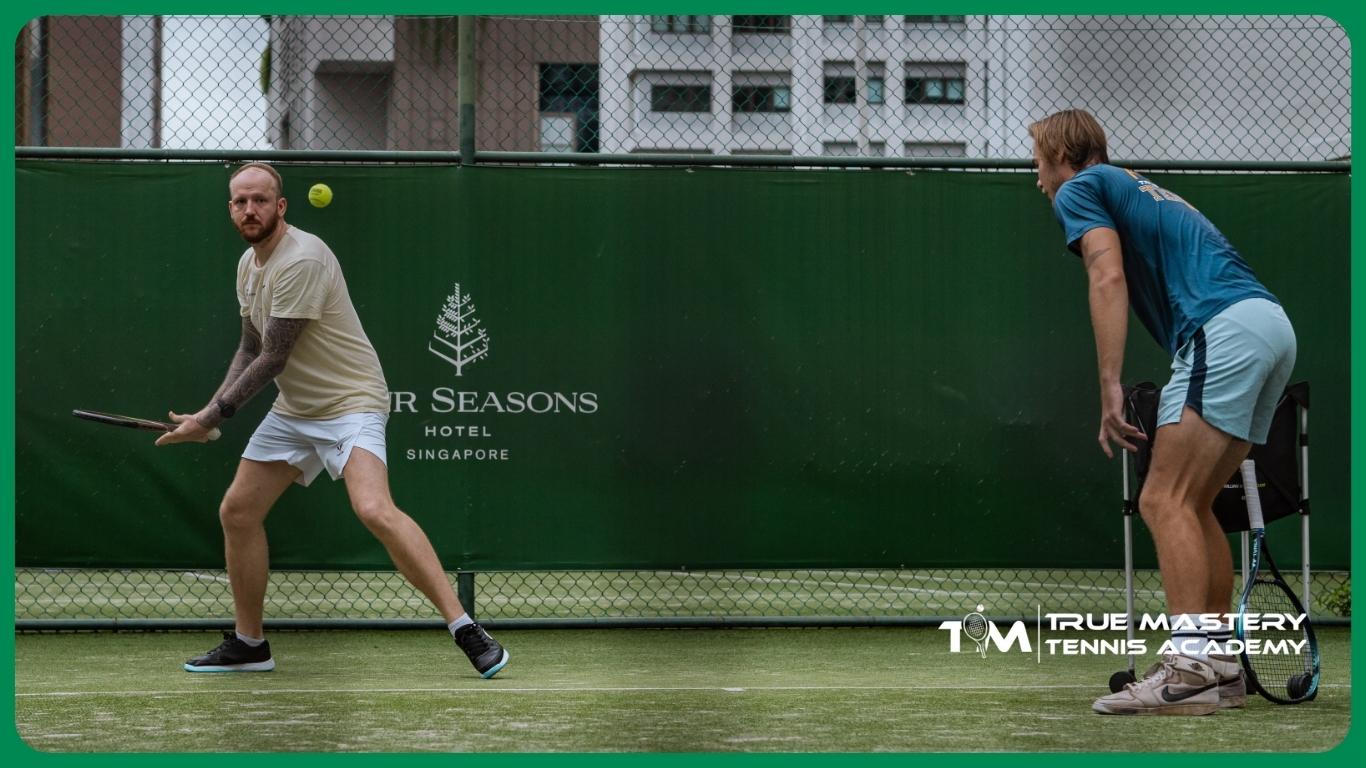
For most adult beginners, a first tennis lesson includes a short warm-up, an introduction to basic grips and court positioning, simple forehand and backhand work, movement practice and easy rallying exercises. Your coach will also assess your coordination, confidence and learning pace so future lessons can be adjusted to your needs.
Your Coach Will First Understand Your Starting Point
Some adults are completely new to racket sports, while others have played badminton, squash or tennis casually before. Your coach may ask about previous experience, fitness, injuries, goals and how often you hope to play.
You do not need a detailed training plan. Saying that you want to rally with friends, become fitter or eventually play matches already gives the coach useful direction. This helps us avoid teaching every beginner exactly the same way.
Expect A Simple Warm-Up Before Hitting
A first lesson should not begin with maximum-speed serving or running from corner to corner.
We normally start with light movement, coordination work and simple racket-and-ball activities. Tennis requires repeated changes of direction, balance and timing, so the warm-up also gives the coach an early look at how comfortably you move and react on court.
You Will Learn How To Hold And Control The Racket
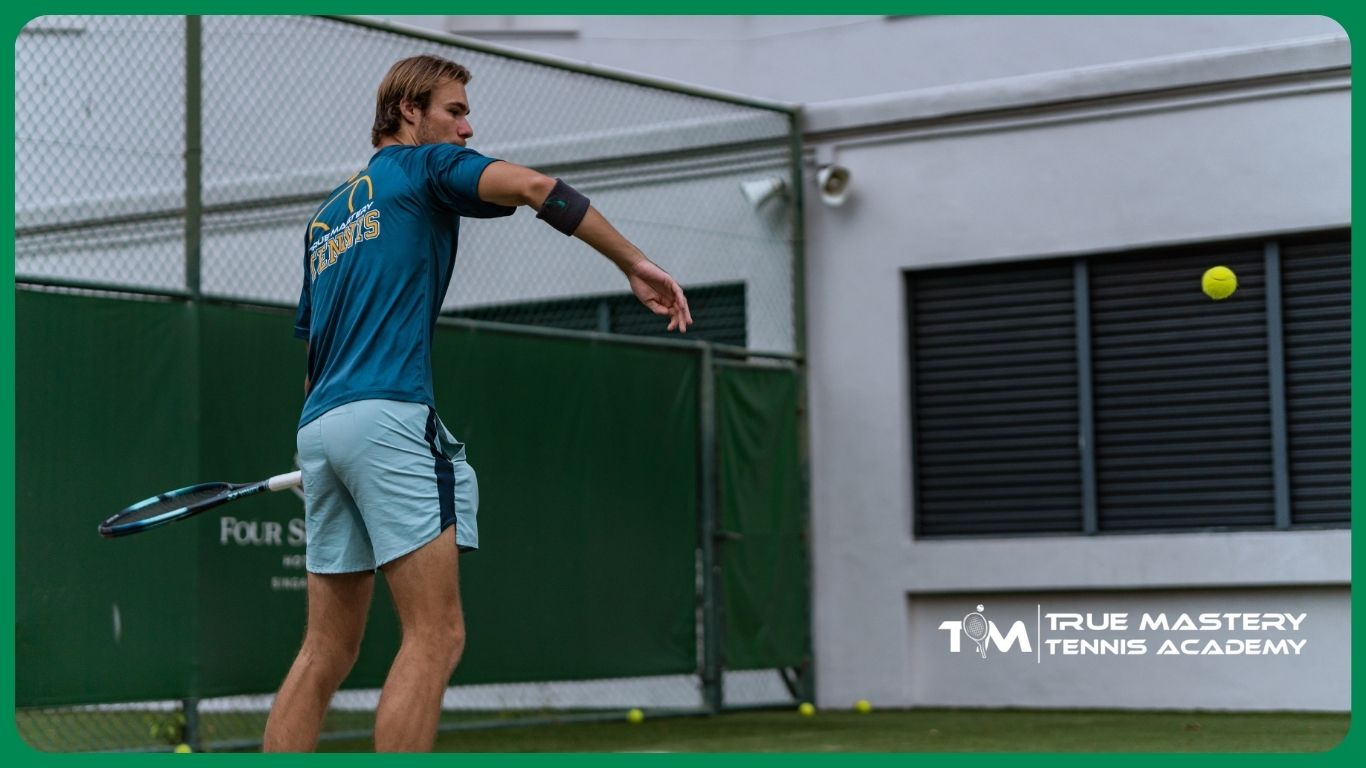
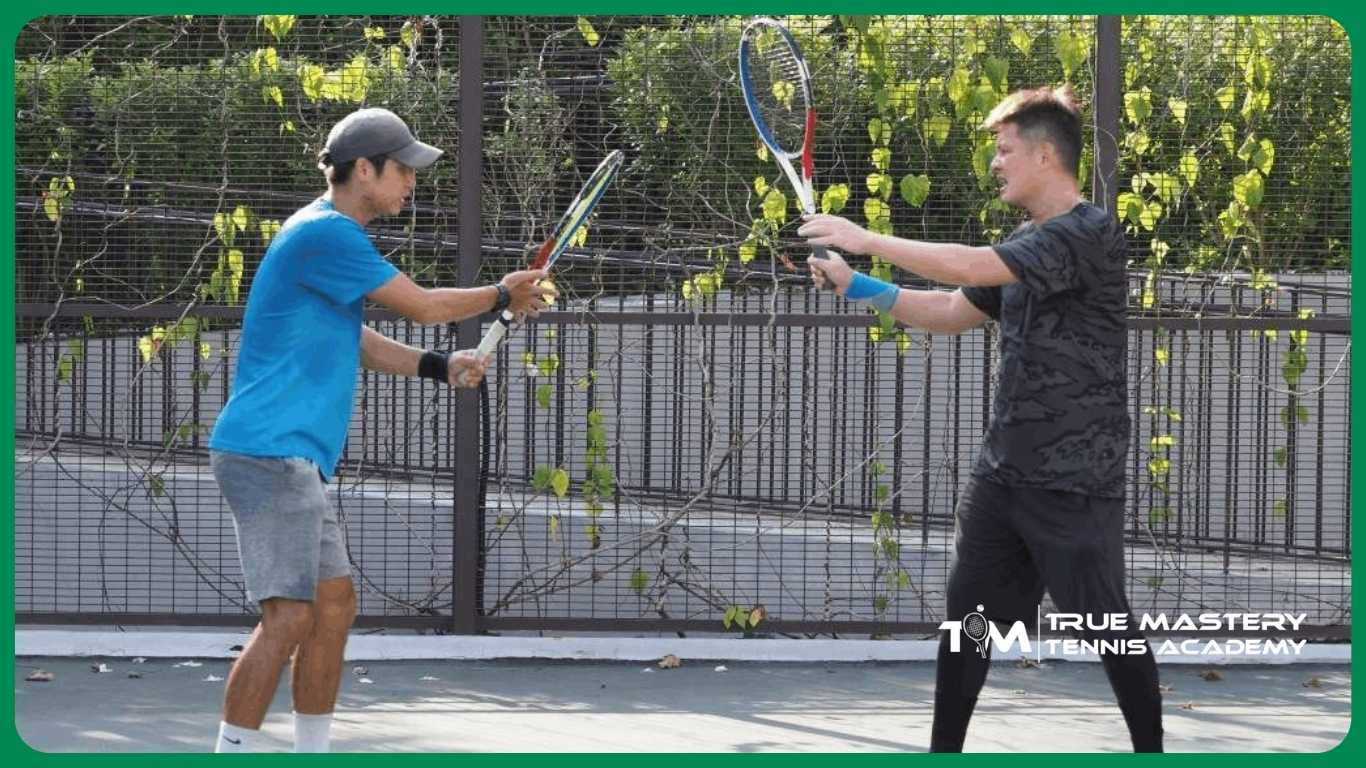
One of the first technical areas is usually racket control. Your coach may introduce a basic grip and explain how the racket face affects where the ball travels.
Do not worry if the grip feels unnatural at first. Adults often arrive with habits from other sports or simply hold the racket in the way that feels strongest. The aim is not to memorise every tennis grip immediately, but to establish a workable foundation for controlled contact.
Forehand And Backhand Basics Usually Come Next
Most adult beginner lessons introduce basic groundstrokes early because they are central to rallying.
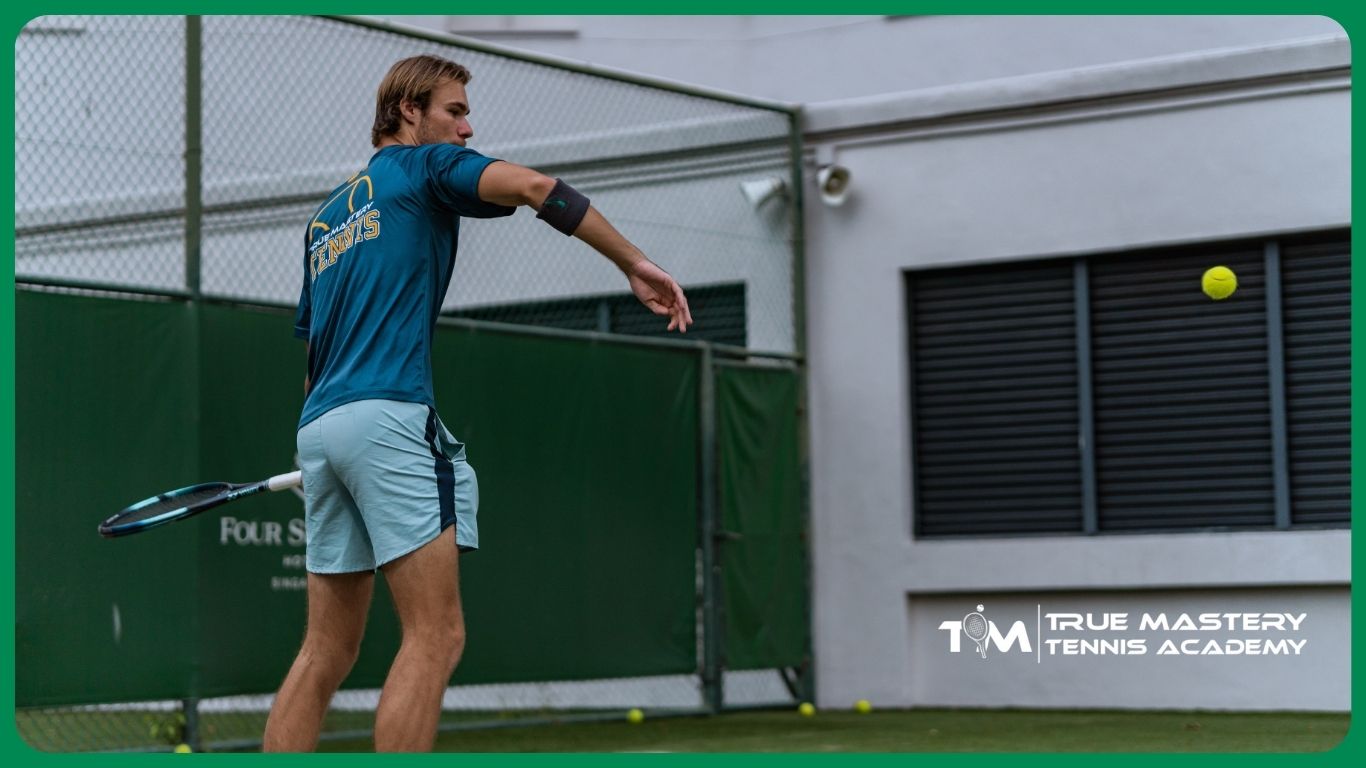
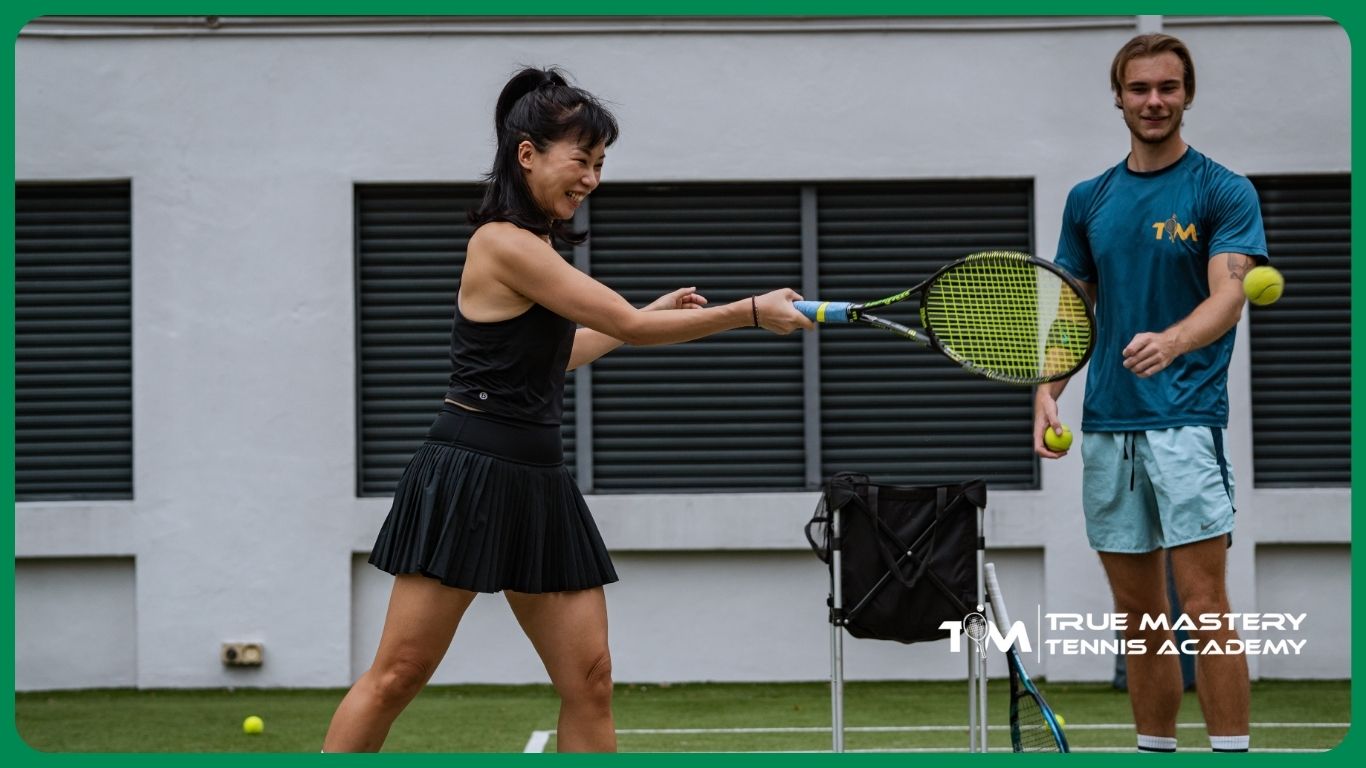
You may start with balls fed gently by the coach rather than immediately hitting from the baseline. This lets you focus on preparation, contact and follow-through without worrying about covering the whole court.
World Tennis coach education for beginner and intermediate players emphasises basic technique, tactics and appropriate training principles, which supports building a manageable foundation before moving to more advanced work.
Do Not Expect To Rally Perfectly Straight Away
Many adults imagine their first lesson ending with long baseline rallies. It can happen, but it should not be how you judge whether the lesson went well.
Early contact may be inconsistent. Balls may go into the net or somewhere you did not intend. That is normal while you are learning timing, spacing and racket control.
A good beginner session adjusts the difficulty so you experience successful contact. Slower feeds, shorter distances or modified balls can help before the challenge increases.
Footwork Starts From The First Lesson
Tennis is not only about what your arm does.
Even during a first lesson, your coach may introduce a ready position, basic recovery and movement towards the ball. You do not need advanced footwork patterns immediately, but learning to move before swinging prevents you from becoming too focused on the racket alone.
Once movement is added, even simple drills can become tiring, so the pace should reflect your fitness and experience.
Your Lesson Should Match Your Learning Pace
Adults do not all learn tennis in the same way. One person may understand technical explanations quickly but need time to coordinate the movement. Another may learn better by watching and copying.
At TM Tennis Academy, we prefer to establish a few useful ideas, practise them and build progressively rather than give a beginner too many corrections at once. World Tennis also describes quality coaching as important across recreational and advanced levels of the sport.
What Should You Bring To Your First Tennis Lesson?
You do not need professional-level equipment.
Wear comfortable sports clothing and suitable court footwear, and bring water for Singapore’s warm conditions. If you already own a tennis racket, bring it along. If you are unsure whether it suits you, your coach can advise you instead of expecting you to buy another racket before your first session.
Most importantly, arrive ready to learn rather than worrying about how well you will perform.
What Happens After Your First Lesson?
By the end of the session, you should have a clearer idea of what tennis feels like and what you need to work on next.
Your coach may recommend focusing on groundstrokes, movement, serving or rally consistency in future sessions depending on what was observed. If you enjoy the lesson, regular practice usually makes more sense than trying to learn everything immediately.
Starting Tennis As An Adult Is More Accessible Than It Looks
You do not need childhood tennis experience to begin. TM Tennis already works with first-time and experienced adult players in Singapore, with lessons adapted to the player’s ability and goals.
If you have been postponing tennis because you feel too inexperienced, your first lesson is exactly where that inexperience belongs. We can assess your starting point, teach the fundamentals at a suitable pace and help you build confidence on court.
The goal is simple: start correctly, learn something useful and leave knowing what your next step should be.
No. Adult beginner tennis lessons can start from complete zero experience. Your coach can introduce basic racket control, movement and strokes gradually, then adjust the lesson according to how quickly you become comfortable.
Not necessarily. If you already own a racket, bring it along. If you are unsure what to buy, asking your coach first can help you avoid choosing equipment that does not suit your size or needs.
You may be introduced to serving, but many first lessons prioritise racket control, groundstrokes, movement and rallying. The exact sequence depends on your coordination, experience and how much can be covered comfortably during the session.
The ideal frequency depends on your schedule, goals and recovery. Many beginners benefit from consistent weekly coaching combined with simple practice between lessons so new movements are reinforced instead of being relearned after long gaps.
Click on the link to find out more about TM Tennis Academy’s lesson package. Chat with our head coach today!